Clearing offers from 56 UCAS tariff points. Subject-specific requirements still apply. See the entry requirements section for details.

Study Ecology and Conservation at Lincoln

Want to help protect wildlife, restore ecosystems, and tackle environmental challenges facing the planet? Ecology and Conservation explores how living organisms interact with the environment and how science can be used to protect biodiversity and natural habitats.

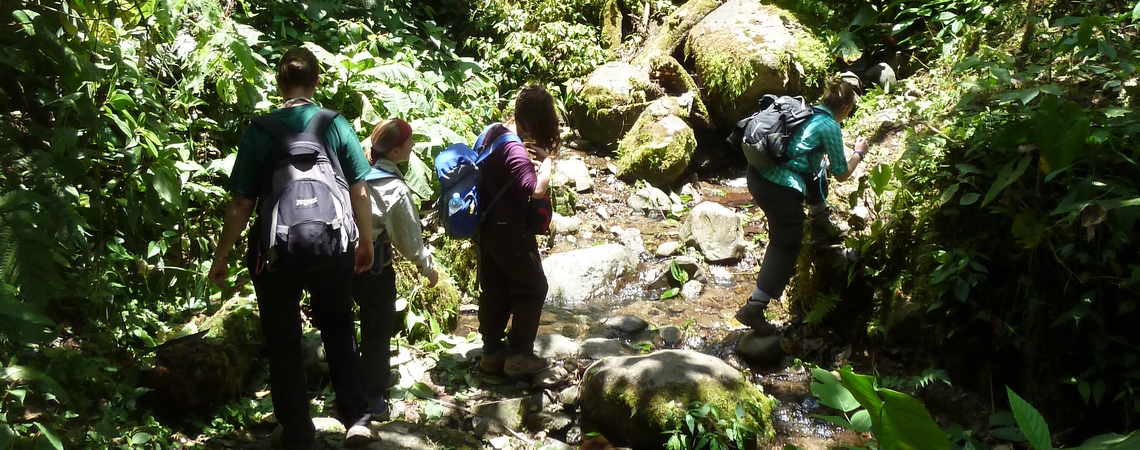
At Lincoln, you can study ecology in the real world, not just in the classroom. From fieldwork and species monitoring to conservation research and environmental data analysis, this course is designed to help you build practical skills alongside scientific knowledge.

You'll learn how ecosystems function, how human activity impacts wildlife, and how conservation strategies are developed and applied. Whether you're interested in wildlife conservation, environmental consultancy, ecological surveying, sustainability, or postgraduate research, this degree is designed to prepare you for a wide range of environmental careers.

With access to specialist facilities, fieldwork opportunities, and supportive teaching staff, Lincoln offers a hands-on learning experience that helps you graduate with confidence and career-ready skills.

Want to help protect wildlife, restore ecosystems, and tackle environmental challenges facing the planet? Ecology and Conservation explores how living organisms interact with the environment and how science can be used to protect biodiversity and natural habitats.

At Lincoln, you can study ecology in the real world, not just in the classroom. From fieldwork and species monitoring to conservation research and environmental data analysis, this course is designed to help you build practical skills alongside scientific knowledge.

You'll learn how ecosystems function, how human activity impacts wildlife, and how conservation strategies are developed and applied. Whether you're interested in wildlife conservation, environmental consultancy, ecological surveying, sustainability, or postgraduate research, this degree is designed to prepare you for a wide range of environmental careers.

With access to specialist facilities, fieldwork opportunities, and supportive teaching staff, Lincoln offers a hands-on learning experience that helps you graduate with confidence and career-ready skills.

I chose this course as it combined my two favourite subjects: Geography and Biology. I really liked the unique blend and it enabled me to study key elements from both subjects.

Why study Ecology and Conservation at Lincoln?

Build practical environmental skills Gain hands-on experience in ecological surveying, habitat assessment, GIS mapping, species identification, environmental monitoring, and field research techniques used across the conservation sector.

Learn through fieldwork

Field-based learning is embedded throughout the course, giving you opportunities to apply your knowledge outside the classroom and experience ecology in action.

Study global environmental challenges

Explore major issues including biodiversity loss, climate change, habitat degradation, sustainability, and conservation policy.

Prepare for a range of careers

Develop transferable scientific, analytical, and research skills valued across environmental, conservation, sustainability, and scientific sectors.

Supportive learning environment

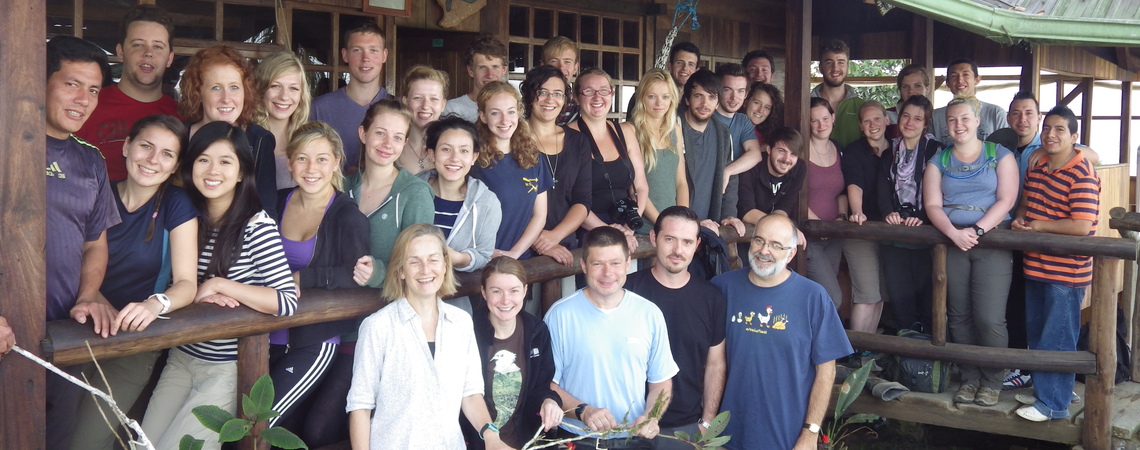
Study within a department focused on student support, practical learning, and helping students develop confidence throughout their degree.

Access specialist facilities

Use laboratories and scientific equipment that support ecological and environmental research and practical investigation.

What you'll learn

This course combines biological science with practical conservation training to help you understand how ecosystems work and how they can be protected.

You may study topics such as:

  • Ecology and biodiversity
  • Conservation biology
  • Animal behaviour and adaptation
  • Environmental science
  • Field survey methods
  • GIS and ecological data analysis
  • Habitat management
  • Evolution and ecosystems
  • Climate and environmental change
  • Research and scientific investigation

Throughout the course, you’ll develop skills in:

  • Scientific research and reporting
  • Data collection and analysis
  • Problem-solving and critical thinking
  • Teamwork and field-based investigation
  • Communication of scientific information

You’ll also have opportunities to undertake independent research projects, helping you explore areas of ecology and conservation that interest you most.

Modules

Module Overview

Comparative Anatomy and Physiology of Animals is concerned with the principles of the diversity of anatomical form and function in animals using a comparative approach. Anatomical adaptations will be explored across taxa within the animal kingdom in order to show how different types of organisms use their anatomy to solve the similar physiological problems. Through this, an understanding will be developed of how organisms from different taxa address physiological aspects of their life histories.

Module Overview

Ecology is the scientific study of the interactions between organisms and their environment. These interactions can be studied across different levels of biological organisation including individuals, populations, communities and ecosystems. This module will examine how these different levels of organisation are interconnected and how the study of ecology allows us to better understand patterns in the natural world

Module Overview

Geography is a fundamentally spatial discipline. As such, spatial data and analyses often lie at the heart of how we understand and navigate life on our planet. This module provides an introduction to Geographical Information Systems (GIS) and Earth Observation, including both the fundamental theories which underpin these technologies and their practical applications. Specifically, this module introduces students to some of the important sources of geospatial data and the technologies underpinning them, and highlights ways in which they are used both within geographical science and more widely. In addition, students will gain hands-on, skills-based experience in processing and analysing data using GIS and Earth Observation software. These are vital tools that will enable students to more rigorously assess the safety and health of the inhabited Earth.

Module Overview

This module aims to provide a broad overview of plant form and function by reviewing the key structural characteristics of cells, tissues and organs in a range of plant species. It investigates the diversity of plant form and the evolutionary history of plant life; emphasis is placed on the adaptations of plants to their environment. It focuses on the relationship between anatomy and the mechanical role of cells, tissues and organs. Concepts and principles are introduced via formal lectures and further developed by using laboratory practicals.

Module Overview

Practical field skills are essential for the Ecology and Conservation degree. This module introduces students to a range of skills including field identification, sampling of specimens, and laboratory analysis. Teaching will cover a range of skills for environmental monitoring and ecological assessment, and introduce students to a range of species protected under UK legislation, and therefore of particular interest to conservation organisations, government departments, and professional ecologists.

Module Overview

Research methods for the Life Sciences aims to introduce the skills and knowledge necessary for students to assimilate and judge scientific knowledge. Students will be introduced to the tools required to search and evaluate the scientific literature relevant to their studies, and some of the key philosophical constructs around which scientific knowledge is based. They will be taught about hypothesis testing, experimental design, data collection, basic mathematical and statistical concepts, and data presentation, and gain hands-on experience of their application.

Module Overview

The aim of this module is to introduce students to the links between ecosystems and human health. The module focuses heavily on the role of human activities in changing ecosystems, covering aspects of human impacts on ecosystems as well as policy and regulatory actions to improve and safeguard vital ecosystems. Impacts are assessed in terms of both human and wider environmental factors such as quality of life and access to safe and healthy resources as well as biodiversity, landscape assets and climate resilience. By exploring a range of relevant case studies, the module will discuss assumptions about environmental/ecosystem interactions and equip students with the necessary critical knowledge and overview for deriving real-world solutions to a representative range of current environmental problems. Teaching and assessment will cover three broad themes including environmental resources and degradation, SDGs, ecosystems and biodiversity and sustainable socio-ecological systems.

Module Overview

This module provides a critical insight into the key biological principles of conservation and their application in a cross-disciplinary context. It will give an overview of the nature and complexity of threats to biodiversity across scales of biological organisation, and approaches to mitigating these. It will detail the methods used to assess risk of extinction / collapse in ecological systems, especially the key foci of management: populations, habitats, and ecosystems. It will highlight the challenges conservation faces in varied contexts: ecological, social, political, economic, historical.

Module Overview

Data is central to any scientific pursuit. Data-centric skills are crucial for any environmental scientist undertaking any form of data collection, management, visualisation and/or analysis. This module introduces knowledge and skills relevant to varied sorts of environmental data: storage, handling and manipulation; data visualisation; statistical analysis, interpretation and communication; and applying such knowledge and skills when designing environmental studies. In the age of information, computational skills are becoming ever more relevant, and this module will hone different computational skills, especially coding.

Module Overview

The Evolution and Biodiversity module introduces the fundamental concepts that explain how the diversity of life on earth has evolved. The module opens with accounts of the historical development of evolutionary biology as a science, teaches the fundamental principles of evolution, from genes through individuals to communities, from micro- to macroevolution. It builds upon basic ecological principles of interacting individuals across a continuum from mutualism to parasitism, and how these interactions drive co-evolution and adaptation to environments, driving diversity and shaping communities of interacting organisms.

Module Overview

This module will focus on understanding both how and why animals behave the way they do. It will consider key concepts within both domestic and wild animal behaviour, drawn from a wide variety of taxonomic groups, and appraise how an animal’s behaviour is influenced by its ecology and evolution, how it links to its underlying cognitive processes, and how it impacts on its welfare and conservation. There will be a particular emphasis on the practical investigation of animal behaviour.

Module Overview

Human influences on the environment can be seen almost everywhere on our planet, from the deepest ocean trenches to the peaks of the Himalayas and out beyond the stratosphere. This module introduces students to a wide range of human-caused environmental issues facing the world today, using a range of global and regional case studies. Students will explore their causes and consequences, as well as potential responses to them, and develop skills in communicating these critical issues to different audiences using different techniques.

Module Overview

This module will introduce students to the applications of GIS and Remote Sensing in supporting evidence-based decisions for sustainable landscape. Students will learn how spatial data is obtained, processed, analysed, and visualized to address real-world problems such as identifying crime hotspots, resources allocation, environmental and ecosystem monitoring and change detection. The module will combine lectures with hands-on practical sessions using industry-standard software such as ArcGIS Pro and QGIS. The theoretical foundations from lectures will enable students to critically interpret spatial data and communicate findings effectively through maps and reports. By exploring a range of GIS and remote sensing techniques, students will develop transferable skills useful for addressing a range of environmental issues.

Module Overview

This module is an introduction to the key major taxonomic groups of invertebrates and vertebrates. Major invertebrate groups will include inter alia: sponges, cnidarians, flatworms, nematodes, annelids, molluscs, arthropods, echinoderms, and cephalochordates. All major vertebrate classes will be considered in detail.

Module Overview

The School believes that an option to study overseas is a valuable educational opportunity for our students. Provision of this option supports the educational aims of the School of Life Sciences and enhances the distinctiveness of its degrees at Lincoln. The optional year is intended to:

- enable students to benefit from studying within a cross cultural environment

- expose students to a wider academic and cultural experience

- enhance their future employment opportunities

- by increasing their cultural and professional mobility.

This module is optional for students within the School. Study Abroad is a year long module which enables students to spend a year studying abroad at one of the University's approved partner institutions. Eligible students must have completed their second year of study to a satisfactory standard and successfully completed the application process for the year abroad.

During the year spent abroad, students share classes with local students and study on a suite of locally-delivered taught modules which have been approved in advance by the University. Upon their return, as part of the assessment for this module, students are required to critically reflect upon their experience of living and studying in a different cultural environment and the skills acquired.

Module Overview

This module aims to help students understand theory, develop skills, build tacit knowledge and, importantly, integrate and apply knowledge and skills acquired from prior learning to novel situations. The module is built around the principle of scientific enquiry and the ownership of that process by students in order to develop practical, cognitive, and affective skills. Student ownership will be developed throughout the module, starting with guided activities that teach core identification and field study skills, and culminating in a student-led field study in which students conceive and design an experiment, collect and analyse data, and present the findings.

Module Overview

This module aims to equip students with the practical knowledge and applied skills needed to design and implement effective habitat and species management strategies in the UK. It emphasizes action-oriented approaches grounded in ecological principles, enabling students to critically evaluate management options and develop feasible, evidence-based solutions for real-world conservation challenges.

Module Overview

This module will consider human-caused environmental change that affects a substantial part of the globe and biological systems. Biological responses to these human induced changes will be considered in terms of how organisms, species and communities may acclimatize, adapt or change. Specifically, we will consider how organisms can respond genetically and phenotypically, and how and why communities may change in their species and functional composition. After consolidating understanding of the causes of, and biological responses to, global change, we will consider what these impacts mean for ecosystem structure and function, the development of novel ecosystems, and approaches for conservation and ecosystem management under global change. This module will cover a range of differing causes of global change e.g. biological invasions or urbanisation, but content will be flexible to remain relevant to current and emerging challenges.

Module Overview

In this module, students undertake an independent programme of research under supervision from a member of staff. It provides students with an opportunity to demonstrate original and critical thought, as well as to build discipline-specific research and project-management skills. We currently offer projects in the laboratory (wet or animal) or field, projects that involve data analysis, literature research, educational research, science communication research, and market research. Students may work individually or in groups addressing similar questions, but must write up individually. The findings of the research will be written up and presented orally. The conduct and performance of the student as a research apprentice will be assessed.

Module Overview

This module provides a critical insight into the study of the biological diversity of soils, including their ecological and functional roles, to understand about best management and conservation practices. It will give a broad overview of the soil habitat and the patterns and drivers of soil biodiversity. The module will also deal with the methods used to manage soil biota and their processes. Concepts and principles will be introduced via formal lectures and further developed by using field and laboratory practicals.

Module Overview

Behavioural Ecology examines the way in which animals behavioural repertoires are shaped by ecological pressures and evolutionary forces, and how they contribute to survival and, ultimately, reproductive success (fitness). This module will therefore explore both how and in what way behaviours have evolved to maximise fitness, considering both short term adjustments and long term adaptations resulting from natural and sexual selection.

Module Overview

This module provides students with the opportunity to investigate biological phenomena in the field at an overseas location. Students work in groups, guided by staff, to develop and test hypotheses allowing them to understand more about biological processes operating within the study area. They are encouraged to view the ecosystem within the wider context of the anthropogenic impacts being imposed on it.

Module Overview

Palaeobiology tackles some of the most challenging and engaging topics of modern biology, including the emergence of biodiversity, patterns of recovery and expansion of ecosystems and species in the aftermath of profound crises (such as mass extinctions), and the interplay between originations and extinctions in shaping the Tree of Life. The module will enable students to comprehend the thrust and scope of fossil-based research, progressing from basic observations to formulation of complex macro-evolutionary inference. Palaeobiology is eminently interdisciplinary, absorbing concepts and methodologies from numerous other fields and providing tools and knowledge of wide use to other biologists, particularly those interested in tempo and mode of evolution and the comparative method.

Module Overview

The environment, its resources, its use, and its degradation are both shaped by and are drivers of unequal power relations at global, regional and local scales. Following, conservation, exploitation and development of planetary natures – including human – underpins many contemporary crises: ecological, climate, economic, geopolitical conflicts and violence, displacement and inequality. The vibrant interdisciplinary field of Political Ecology aims to assess and interpret the politics shaping socio-ecological relations, applying critical analyses to topics spanning forestry, water and mineral extraction to urbanization, development and technology, plus many others.

Module Overview

In this module students will gain an understanding of, and an appreciation for, the diversity, biology, ecology and evolution of the insects. Topics covered will provide a better understanding of basic entomological principles covering fundamentals of insect biology covering key aspects of evolutionary history, diversity, anatomy, physiology, and life history. Thereafter, there will be teaching sessions based around important themes of insect life, such as sensory perception, locomotion, reproduction, ecology, and economic importance.

Module Overview

This module examines the evolving relationships between humans and the natural world, challenging dominant narratives that separate nature and society by inviting students to explore the multiplicity of socio-natures and more-than-human perspectives. Throughout the module, students will engage with theories, methodologies, and case studies that introduce diverse and innovative approaches to understanding and researching nature-society interactions. The first half of the module emphasises more-than-human theories and methodologies, while the second half explores their real-world implications, examining the broader environmental, historical, and institutional frameworks that shape human perceptions of nature. By developing a nuanced view of complex, interwoven nature-society dynamics, the module will prepare students to engage critically with and thoughtfully address pressing environmental challenges whilst embracing multi-species practices and perspectives.

Module Overview

This module comprises a research project for the MBio suite of programmes. The project is supervised by a member of the Life Sciences academic staff and provides the opportunity to contribute to high-impact research across a variety of research areas.

The projects are set within one of the School's research groups and can be enhanced by research workshops and transferable skills offered in the accompanying modules. Projects present the opportunity of work towards generating a scientific article of publishable quality.

Module Overview

This module centres on workshops in research techniques which are delivered by supervisors of research projects. Workshops will be delivered approximately fortnightly throughout Semesters A and B. The workshops are split into three broad research areas: Animal Behaviour, Cognition and Welfare; Biomedical (including general Biochemical and Cellular), and Evolution and Ecology. Workshops combine demonstrations with hands-on work in-lab or in-field. Students are offered a choice of workshops from an extensive list of options, and the write up of eight of these will form the basis of assessment.

Module Overview

The module focuses on the development of transferable skills that are applicable both professionally and to research projects, within the programme of study and beyond. The skills will be relevant to the broad life and environmental sciences and will allow students to strengthen their proficiency primarily in these areas: scientific writing and communication skills, research data analysis and presentation, professional and career skills.


† Some courses may offer optional modules. The availability of optional modules may vary from year to year and will be subject to minimum student numbers being achieved. This means that the availability of specific optional modules cannot be guaranteed. Optional module selection may also be affected by staff availability.

Modules

Module Overview

Comparative Anatomy and Physiology of Animals is concerned with the principles of the diversity of anatomical form and function in animals using a comparative approach. Anatomical adaptations will be explored across taxa within the animal kingdom in order to show how different types of organisms use their anatomy to solve the similar physiological problems. Through this, an understanding will be developed of how organisms from different taxa address physiological aspects of their life histories.

Module Overview

Ecology is the scientific study of the interactions between organisms and their environment. These interactions can be studied across different levels of biological organisation including individuals, populations, communities and ecosystems. This module will examine how these different levels of organisation are interconnected and how the study of ecology allows us to better understand patterns in the natural world

Module Overview

Geography is a fundamentally spatial discipline. As such, spatial data and analyses often lie at the heart of how we understand and navigate life on our planet. This module provides an introduction to Geographical Information Systems (GIS) and Earth Observation, including both the fundamental theories which underpin these technologies and their practical applications. Specifically, this module introduces students to some of the important sources of geospatial data and the technologies underpinning them, and highlights ways in which they are used both within geographical science and more widely. In addition, students will gain hands-on, skills-based experience in processing and analysing data using GIS and Earth Observation software. These are vital tools that will enable students to more rigorously assess the safety and health of the inhabited Earth.

Module Overview

This module aims to provide a broad overview of plant form and function by reviewing the key structural characteristics of cells, tissues and organs in a range of plant species. It investigates the diversity of plant form and the evolutionary history of plant life; emphasis is placed on the adaptations of plants to their environment. It focuses on the relationship between anatomy and the mechanical role of cells, tissues and organs. Concepts and principles are introduced via formal lectures and further developed by using laboratory practicals.

Module Overview

Practical field skills are essential for the Ecology and Conservation degree. This module introduces students to a range of skills including field identification, sampling of specimens, and laboratory analysis. Teaching will cover a range of skills for environmental monitoring and ecological assessment, and introduce students to a range of species protected under UK legislation, and therefore of particular interest to conservation organisations, government departments, and professional ecologists.

Module Overview

Research methods for the Life Sciences aims to introduce the skills and knowledge necessary for students to assimilate and judge scientific knowledge. Students will be introduced to the tools required to search and evaluate the scientific literature relevant to their studies, and some of the key philosophical constructs around which scientific knowledge is based. They will be taught about hypothesis testing, experimental design, data collection, basic mathematical and statistical concepts, and data presentation, and gain hands-on experience of their application.

Module Overview

The aim of this module is to introduce students to the links between ecosystems and human health. The module focuses heavily on the role of human activities in changing ecosystems, covering aspects of human impacts on ecosystems as well as policy and regulatory actions to improve and safeguard vital ecosystems. Impacts are assessed in terms of both human and wider environmental factors such as quality of life and access to safe and healthy resources as well as biodiversity, landscape assets and climate resilience. By exploring a range of relevant case studies, the module will discuss assumptions about environmental/ecosystem interactions and equip students with the necessary critical knowledge and overview for deriving real-world solutions to a representative range of current environmental problems. Teaching and assessment will cover three broad themes including environmental resources and degradation, SDGs, ecosystems and biodiversity and sustainable socio-ecological systems.

Module Overview

This module provides a critical insight into the key biological principles of conservation and their application in a cross-disciplinary context. It will give an overview of the nature and complexity of threats to biodiversity across scales of biological organisation, and approaches to mitigating these. It will detail the methods used to assess risk of extinction / collapse in ecological systems, especially the key foci of management: populations, habitats, and ecosystems. It will highlight the challenges conservation faces in varied contexts: ecological, social, political, economic, historical.

Module Overview

Data is central to any scientific pursuit. Data-centric skills are crucial for any environmental scientist undertaking any form of data collection, management, visualisation and/or analysis. This module introduces knowledge and skills relevant to varied sorts of environmental data: storage, handling and manipulation; data visualisation; statistical analysis, interpretation and communication; and applying such knowledge and skills when designing environmental studies. In the age of information, computational skills are becoming ever more relevant, and this module will hone different computational skills, especially coding.

Module Overview

This module introduces the fundamental concepts that explain how the diversity of life on earth has evolved. The module opens with accounts of the historical development of evolutionary biology as a science, teaches the fundamental principles of evolution, from genes through individuals to communities, from micro- to macroevolution. It builds upon basic ecological principles of interacting individuals across a continuum from mutualism to parasitism, and how these interactions drive co-evolution and adaptation to environments, driving diversity and shaping communities of interacting organisms.

Module Overview

This module will focus on understanding both how and why animals behave the way they do. It will consider key concepts within both domestic and wild animal behaviour, drawn from a wide variety of taxonomic groups, and appraise how an animal’s behaviour is influenced by its ecology and evolution, how it links to its underlying cognitive processes, and how it impacts on its welfare and conservation. There will be a particular emphasis on the practical investigation of animal behaviour.

Module Overview

Human influences on the environment can be seen almost everywhere on our planet, from the deepest ocean trenches to the peaks of the Himalayas and out beyond the stratosphere. This module introduces students to a wide range of human-caused environmental issues facing the world today, using a range of global and regional case studies. Students will explore their causes and consequences, as well as potential responses to them, and develop skills in communicating these critical issues to different audiences using different techniques.

Module Overview

This module will introduce students to the applications of GIS and Remote Sensing in supporting evidence-based decisions for sustainable landscape. Students will learn how spatial data is obtained, processed, analysed, and visualized to address real-world problems such as identifying crime hotspots, resources allocation, environmental and ecosystem monitoring and change detection. The module will combine lectures with hands-on practical sessions using industry-standard software such as ArcGIS Pro and QGIS. The theoretical foundations from lectures will enable students to critically interpret spatial data and communicate findings effectively through maps and reports. By exploring a range of GIS and remote sensing techniques, students will develop transferable skills useful for addressing a range of environmental issues.

Module Overview

This module is an introduction to the key major taxonomic groups of invertebrates and vertebrates. Major invertebrate groups will include inter alia: sponges, cnidarians, flatworms, nematodes, annelids, molluscs, arthropods, echinoderms, and cephalochordates. All major vertebrate classes will be considered in detail.

Module Overview

The School believes that an option to study overseas is a valuable educational opportunity for our students. Provision of this option supports the educational aims of the School of Life Sciences and enhances the distinctiveness of its degrees at Lincoln. The optional year is intended to:

- enable students to benefit from studying within a cross cultural environment;

- expose students to a wider academic and cultural experience;

- enhance their future employment opportunities;

- by increasing their cultural and professional mobility.

This module is optional for students within the School. Study Abroad is a year long module which enables students to spend a year studying abroad at one of the University's approved partner institutions. Eligible students must have completed their second year of study to a satisfactory standard and successfully completed the application process for the year abroad.

During the year spent abroad, students share classes with local students and study on a suite of locally-delivered taught modules which have been approved in advance by the University. Upon their return, as part of the assessment for this module, students are required to critically reflect upon their experience of living and studying in a different cultural environment and the skills acquired.

Module Overview

This module aims to help students understand theory, develop skills, build tacit knowledge and, importantly, integrate and apply knowledge and skills acquired from prior learning to novel situations. The module is built around the principle of scientific enquiry and the ownership of that process by students in order to develop practical, cognitive, and affective skills. Student ownership will be developed throughout the module, starting with guided activities that teach core identification and field study skills, and culminating in a student-led field study in which students conceive and design an experiment, collect and analyse data, and present the findings.

Module Overview

This module aims to equip students with the practical knowledge and applied skills needed to design and implement effective habitat and species management strategies in the UK. It emphasizes action-oriented approaches grounded in ecological principles, enabling students to critically evaluate management options and develop feasible, evidence-based solutions for real-world conservation challenges.

Module Overview

This module will consider human-caused environmental change that affects a substantial part of the globe and biological systems. Biological responses to these human induced changes will be considered in terms of how organisms, species and communities may acclimatize, adapt or change. Specifically, we will consider how organisms can respond genetically and phenotypically, and how and why communities may change in their species and functional composition. After consolidating understanding of the causes of, and biological responses to, global change, we will consider what these impacts mean for ecosystem structure and function, the development of novel ecosystems, and approaches for conservation and ecosystem management under global change. This module will cover a range of differing causes of global change e.g. biological invasions or urbanisation, but content will be flexible to remain relevant to current and emerging challenges.

Module Overview

In this module, students undertake an independent programme of research under supervision from a member of staff. It provides students with an opportunity to demonstrate original and critical thought, as well as to build discipline-specific research and project-management skills. We currently offer projects in the laboratory (wet or animal) or field, projects that involve data analysis, literature research, educational research, science communication research, and market research. Students may work individually or in groups addressing similar questions, but must write up individually. The findings of the research will be written up and presented orally. The conduct and performance of the student as a research apprentice will be assessed.

Module Overview

This module provides a critical insight into the study of the biological diversity of soils, including their ecological and functional roles, to understand about best management and conservation practices. It will give a broad overview of the soil habitat and the patterns and drivers of soil biodiversity. The module will also deal with the methods used to manage soil biota and their processes. Concepts and principles will be introduced via formal lectures and further developed by using field and laboratory practicals.

Module Overview

Behavioural Ecology examines the way in which animals behavioural repertoires are shaped by ecological pressures and evolutionary forces, and how they contribute to survival and, ultimately, reproductive success (fitness). This module will therefore explore both how and in what way behaviours have evolved to maximise fitness, considering both short term adjustments and long term adaptations resulting from natural and sexual selection.

Module Overview

This module provides students with the opportunity to investigate biological phenomena in the field at an overseas location. Students work in groups, guided by staff, to develop and test hypotheses allowing them to understand more about biological processes operating within the study area. They are encouraged to view the ecosystem within the wider context of the anthropogenic impacts being imposed on it.

Module Overview

Palaeobiology tackles some of the most challenging and engaging topics of modern biology, including the emergence of biodiversity, patterns of recovery and expansion of ecosystems and species in the aftermath of profound crises (such as mass extinctions), and the interplay between originations and extinctions in shaping the Tree of Life. The module will enable students to comprehend the thrust and scope of fossil-based research, progressing from basic observations to formulation of complex macro-evolutionary inference. Palaeobiology is eminently interdisciplinary, absorbing concepts and methodologies from numerous other fields and providing tools and knowledge of wide use to other biologists, particularly those interested in tempo and mode of evolution and the comparative method.

Module Overview

The environment, its resources, its use, and its degradation are both shaped by and are drivers of unequal power relations at global, regional and local scales. Following, conservation, exploitation and development of planetary natures – including human – underpins many contemporary crises: ecological, climate, economic, geopolitical conflicts and violence, displacement and inequality. The vibrant interdisciplinary field of Political Ecology aims to assess and interpret the politics shaping socio-ecological relations, applying critical analyses to topics spanning forestry, water and mineral extraction to urbanization, development and technology, plus many others.

Module Overview

In this module students will gain an understanding of, and an appreciation for, the diversity, biology, ecology and evolution of the insects. Topics covered will provide a better understanding of basic entomological principles covering fundamentals of insect biology covering key aspects of evolutionary history, diversity, anatomy, physiology, and life history. Thereafter, there will be teaching sessions based around important themes of insect life, such as sensory perception, locomotion, reproduction, ecology, and economic importance.

Module Overview

This module examines the evolving relationships between humans and the natural world, challenging dominant narratives that separate nature and society by inviting students to explore the multiplicity of socio-natures and more-than-human perspectives. Throughout the module, students will engage with theories, methodologies, and case studies that introduce diverse and innovative approaches to understanding and researching nature-society interactions. The first half of the module emphasises more-than-human theories and methodologies, while the second half explores their real-world implications, examining the broader environmental, historical, and institutional frameworks that shape human perceptions of nature. By developing a nuanced view of complex, interwoven nature-society dynamics, the module will prepare students to engage critically with and thoughtfully address pressing environmental challenges whilst embracing multi-species practices and perspectives.

Module Overview

This module comprises a research project for the MBio suite of programmes. The project is supervised by a member of the Life Sciences academic staff and provides the opportunity to contribute to high-impact research across a variety of research areas.

The projects are set within one of the School's research groups and can be enhanced by research workshops and transferable skills offered in the accompanying modules. Projects present the opportunity of work towards generating a scientific article of publishable quality.

Module Overview

This module centres on workshops in research techniques which are delivered by supervisors of research projects. Workshops will be delivered approximately fortnightly throughout Semesters A and B. The workshops are split into three broad research areas: Animal Behaviour, Cognition and Welfare; Biomedical (including general Biochemical and Cellular), and Evolution and Ecology. Workshops combine demonstrations with hands-on work in-lab or in-field. Students are offered a choice of workshops from an extensive list of options, and the write up of eight of these will form the basis of assessment.

Module Overview

The module focuses on the development of transferable skills that are applicable both professionally and to research projects, within the programme of study and beyond. The skills will be relevant to the broad life and environmental sciences and will allow students to strengthen their proficiency primarily in these areas: scientific writing and communication skills, research data analysis and presentation, professional and career skills.


† Some courses may offer optional modules. The availability of optional modules may vary from year to year and will be subject to minimum student numbers being achieved. This means that the availability of specific optional modules cannot be guaranteed. Optional module selection may also be affected by staff availability.

Support and student experience

Starting university can feel like a big step, especially if you’re still deciding on your future career path. At Lincoln, support is built into the student experience from day one.

Students can benefit from:

  • Academic guidance and feedback
  • Personal tutor support
  • Careers and employability advice
  • Study skills support
  • Wellbeing and pastoral services
  • Opportunities to develop confidence through practical learning

The course is designed to help students grow both academically and professionally, regardless of previous experience in ecology or conservation.

Careers and future opportunities

Ecology and Conservation graduates can pursue careers across environmental science, wildlife protection, sustainability, research, and land management sectors.

Potential career paths include:

  • Ecologist
  • Conservation officer
  • Environmental consultant
  • Wildlife ranger
  • Habitat surveyor
  • Sustainability officer
  • Environmental educator
  • Research assistant
  • Conservation project officer
  • Ecological data analyst

Graduates may work for:

  • Wildlife and conservation charities
  • Environmental consultancies
  • Government agencies
  • National parks and conservation organisations
  • Research institutions
  • Sustainability and environmental management organisations

The course also provides a strong foundation for postgraduate study in ecology, conservation, environmental management, wildlife science, and related biological sciences.

Employers increasingly value graduates with practical environmental skills, field experience, scientific literacy, and data analysis capabilities — all areas developed throughout this course.

Is this course right for you?

This course could be a good fit if you:

  • Care about wildlife, nature, and the environment
  • Enjoy biology or environmental science
  • Want a degree with practical fieldwork experience
  • Are interested in sustainability and conservation challenges
  • Want to build skills for environmental careers
  • Enjoy scientific investigation and problem-solving

You do not need to have your career fully planned before starting — this course is designed to help you explore different pathways within ecology and conservation while building valuable scientific and professional skills.

Entry Requirements 2026-27

United Kingdom

112 to 120 UCAS Tariff points.

This must be achieved from a minimum of 2 A Levels or equivalent Level 3 qualifications, to include 40 points from Biology, Geography, Geology or Environmental Science. For example:

A Level: BBC to BBB to include a Grade B in Biology, Geography, Geology or Environmental Science.

BTEC Extended Diploma in Animal Management and Applied Science accepted depending on modules: DDM

(Please include units on application)

T Level in Science: Merit Overall

(Health or Health Science not accepted)

Access to Higher Education Diploma: 112 to 120 UCAS points to be achieved from 45 Level 3 credits, including 40 points from 15 credits in Biology, Geography, Geology or Environmental Science.

International Baccalaureate: 30 points overall to include a Higher Level in Biology, Geography, Geology or Environmental Science.

GCSE's: Minimum of three at grade 4 or above, which must include English. Equivalent Level 2 qualifications may be considered.

The University accepts a wide range of qualifications as the basis for entry and do accept a combination of qualifications which may include A Levels, BTECs, Extended Project Qualification (EPQ).

We may also consider applicants with extensive and relevant work experience and will give special individual consideration to those who do not meet the standard entry qualifications.

International

Non UK Qualifications:

If you have studied outside of the UK, and are unsure whether your qualification meets the above requirements, please visit our country pages

https://www.lincoln.ac.uk/studywithus/internationalstudents/entryrequirementsandyourcountry/ for information on equivalent qualifications.

EU and Overseas students will be required to demonstrate English language proficiency equivalent to IELTS 6.0 overall, with a minimum of 5.5 in each element. For information regarding other English language qualifications we accept, please visit the English Requirements page

https://www.lincoln.ac.uk/studywithus/internationalstudents/englishlanguagerequirementsandsupport/englishlanguagerequirements/

If you do not meet the above IELTS requirements, you may be able to take part in one of our Pre-sessional English and Academic Study Skills courses.

https://www.lincoln.ac.uk/studywithus/internationalstudents/englishlanguagerequirementsandsupport/pre-sessionalenglishandacademicstudyskills/


For applicants who do not meet our standard entry requirements, our Science Foundation Year can provide an alternative route of entry onto our full degree programmes:
https://www.lincoln.ac.uk/course/sfysfyub/lifesciences/

If you would like further information about entry requirements, or would like to discuss whether the qualifications you are currently studying are acceptable, please contact the Admissions team on 01522 886097, or email admissions@lincoln.ac.uk

Contextual Offers

At Lincoln, we recognise that not everybody has had the same advice and support to help them get to higher education. Contextual offers are one of the ways we remove the barriers to higher education, ensuring that we have fair access for all students regardless of background and personal experiences. For more information, including eligibility criteria, visit our Offer Guide pages. If you are applying to a course that has any subject specific requirements, these will still need to be achieved as part of the standard entry criteria.

Entry Requirements 2027-28

United Kingdom

112 to 120 UCAS Tariff points from a minimum of 2 A Levels or equivalent Level 3 qualifications, to include 40 points from Biology, Geography, Geology or Environmental Science.

If you are eligible for a contextual offer, a one grade or 8 UCAS Tariff point reduction to the standard entry requirements will be applied. Subject specific requirements will still be required as part of the standard entry criteria.

A Level: BBB to include a Grade B in Biology, Geography, Geology or Environmental Science.

BTEC Extended Diploma in Animal Management : DDM
BTED Extended Diploma in Applied Science considered depending on units studied. Please include these on your application.

We will accept a Pearson Level 3 Alternative Academic Qualification BTEC National (equivalent to 1 A Level) in Medical Science or Applied Science to meet the subject specific requirement: Merit

T Level in Science: Merit Overall
(T Levels in Health or Health Science are not accepted)

Access to Higher Education Diploma: 120 UCAS points to be achieved from 45 Level 3 credits, including 40 points from 15 credits in Biology, Geography, Geology or Environmental Science.

International Baccalaureate: 30 points overall to include a Higher Level in Biology, Geography, Geology or Environmental Science.

GCSEs: Minimum of three at grade 4 or above, which must include English. Equivalent Level 2 qualifications may be considered.


The University accepts a wide range of qualifications as the basis for entry and do accept a combination of qualifications which may include A Levels, BTECs, Extended Project Qualification (EPQ).

We may also consider applicants with extensive and relevant work experience and will give special individual consideration to those who do not meet the standard entry qualifications.

International

Non UK Qualifications:

If you have studied outside of the UK, and are unsure whether your qualification meets the above requirements, please visit our country pages

https://www.lincoln.ac.uk/studywithus/internationalstudents/entryrequirementsandyourcountry/ for information on equivalent qualifications.

EU and Overseas students will be required to demonstrate English language proficiency equivalent to IELTS 6.0 overall, with a minimum of 5.5 in each element. For information regarding other English language qualifications we accept, please visit the English Requirements page

https://www.lincoln.ac.uk/studywithus/internationalstudents/englishlanguagerequirementsandsupport/englishlanguagerequirements/

If you do not meet the above IELTS requirements, you may be able to take part in one of our Pre-sessional English and Academic Study Skills courses.

https://www.lincoln.ac.uk/studywithus/internationalstudents/englishlanguagerequirementsandsupport/pre-sessionalenglishandacademicstudyskills/


For applicants who do not meet our standard entry requirements, our Science Foundation Year can provide an alternative route of entry onto our full degree programmes:
https://www.lincoln.ac.uk/course/sfysfyub/lifesciences/

If you would like further information about entry requirements, or would like to discuss whether the qualifications you are currently studying are acceptable, please contact the Admissions team on 01522 886097, or email admissions@lincoln.ac.uk

Contextual Offers

At Lincoln, we recognise that not everybody has had the same advice and support to help them get to higher education. Contextual offers are one of the ways we remove the barriers to higher education, ensuring that we have fair access for all students regardless of background and personal experiences. For more information, including eligibility criteria, visit our Offer Guide pages. If you are applying to a course that has any subject specific requirements, these will still need to be achieved as part of the standard entry criteria.

Fees and Funding

University Study is a major investment, so it’s important to understand the costs and support available. A full breakdown of the fees associated with this programme can be found below. Eligible students may be able to access scholarships and bursaries to help with study costs.

Course Fees

Fees and Funding

University Study is a major investment, so it’s important to understand the costs and support available. A full breakdown of the fees associated with this programme can be found below. Eligible students may be able to access scholarships and bursaries to help with study costs.

Course Fees

Find out More by Visiting Us

The best way to find out what it is really like to live and learn at Lincoln is to visit us in person. We offer a range of opportunities across the year to help you to get a real feel for what it might be like to study here.

Three students walking together on campus in the sunshine

What You Need to Know

We want you to have all the information you need to make an informed decision on where and what you want to study. In addition to the information provided on this course page, our What You Need to Know page offers explanations on key topics including programme validation/revalidation, additional costs, and contact hours.

What You Need to Know

We want you to have all the information you need to make an informed decision on where and what you want to study. In addition to the information provided on this course page, our What You Need to Know page offers explanations on key topics including programme validation/revalidation, additional costs, and contact hours.

The University intends to provide its courses as outlined in these pages, although the University may make changes in accordance with the Student Admissions Terms and Conditions.