/prod01/university-of-lincoln-cdn-pxl/media/responsive2017/images/openday/DSC04469.jpg)
Guest Speakers
Throughout the programme, students can hear from guest speakers including Radiologists, Consultant Radiographers, advanced practitioners, service users and carers, and representatives from the Society of Radiographers.
/filters:format(webp)/prod01/university-of-lincoln-cdn-pxl/media/responsive2017/images/course/uspimages600X400/Students,in,Minerva,on,sofas,700X400.jpg)
This course is currently closed for Clearing 2026.
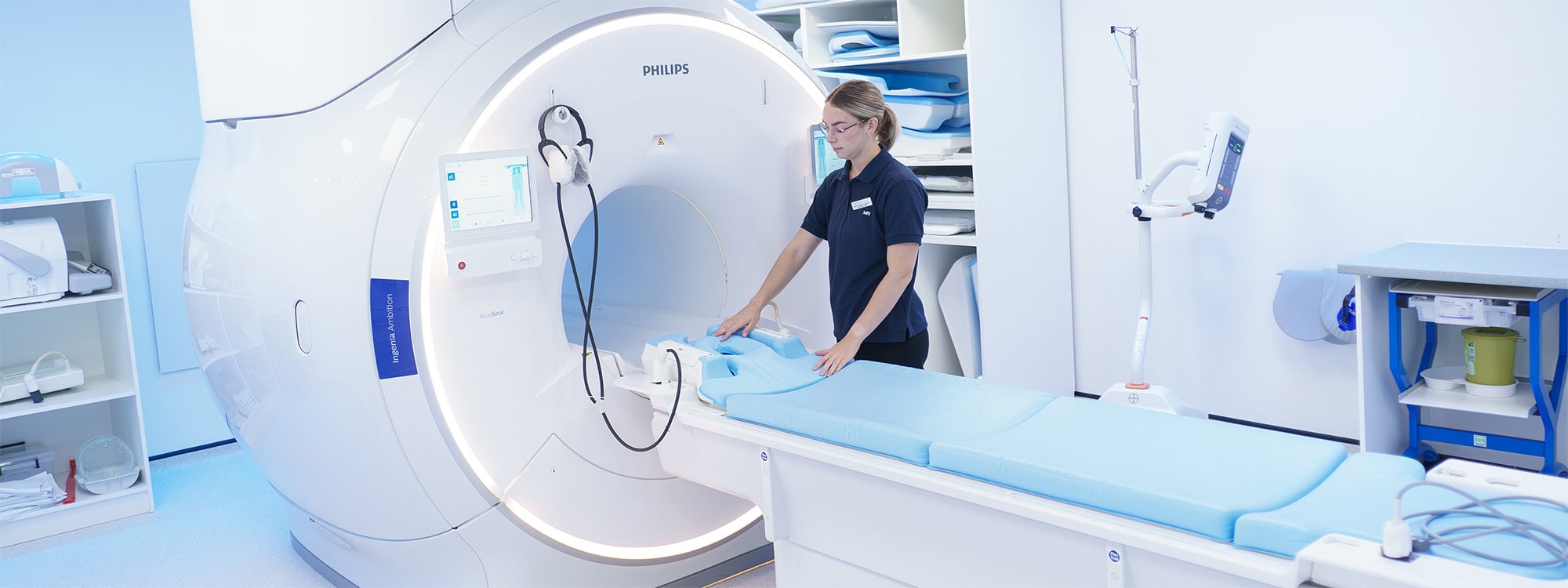
Diagnostic Radiography is the science of using imaging technology to diagnose illness and injury. Radiographers play a vital role in healthcare, helping doctors make accurate decisions that directly impact patient care.
At Lincoln, this course is designed to take you from curious beginner to confident healthcare professional. You'll learn how the human body works, how to operate advanced imaging equipment, and how to support patients in clinical environments, all while building the skills needed for a registered career in the NHS.
Successful completion of the course qualifies you for Health and Care Professions Council (HCPC) registration, which is required to work as a Diagnostic Radiographer in NHS and UK private sector radiography departments.
This course prepares you for a career post-university. With extensive clinical placements, professional accreditation, and a clear path into employment, you graduate ready to step into a vital, in-demand role.
Diagnostic Radiography is the science of using imaging technology to diagnose illness and injury. Radiographers play a vital role in healthcare, helping doctors make accurate decisions that directly impact patient care.
At Lincoln, this course is designed to take you from curious beginner to confident healthcare professional. You'll learn how the human body works, how to operate advanced imaging equipment, and how to support patients in clinical environments, all while building the skills needed for a registered career in the NHS.
Successful completion of the course qualifies you for Health and Care Professions Council (HCPC) registration, which is required to work as a Diagnostic Radiographer in NHS and UK private sector radiography departments.
This course prepares you for a career post-university. With extensive clinical placements, professional accreditation, and a clear path into employment, you graduate ready to step into a vital, in-demand role.
Throughout the programme, students can hear from guest speakers including Radiologists, Consultant Radiographers, advanced practitioners, service users and carers, and representatives from the Society of Radiographers.
✔ Start your career with confident first steps Gain hands-on experience through 1,260 hours of clinical placement in radiology departments.
✔ Train for a registered profession Successful completion qualifies you for HCPC registration, a requirement for working as a Diagnostic Radiographer.
✔ Learn in a safe simulation environment Use VR simulation to practise X-ray positioning, exposure factors, and image creation before entering a clinical department.
✔ Strong clinical partnerships The curriculum has been developed with input from local hospital Trusts, helping ensure it reflects employer expectations.
✔ Consistent placement experience Placements are consistent across the three years of the course, helping you gain experience in a wide range of working practices
✔ Learn with purpose Every skill you develop links directly to real patient care, diagnosis, and safe clinical practice.
✔ Small cohort, stronger support Learn in a smaller group where you are known by your tutors, with more opportunity to build strong peer and academic relationships.
✔ Graduate ready to enter healthcare Prepare for a career in NHS and private sector radiography departments.
This course is built around what you’ll actually need in practice, not just theory.
You’ll develop:
The aim of this module is to introduce you to anatomical and medical terminology, and cell and tissue structure and function, in health and in disease. You will study normal and abnormal anatomy and physiology of the human body, including body systems, that will be applied to their level of radiographic practice.
This module relates to professional practice that is informed by values and ethics. This module will encourage you to promote social inclusion, value diversity, and promote ethical healthcare practice. You will explore different perspectives and how their own personal and professional values impact on their practice. This module will require you to demonstrate knowledge, understanding, and application of theory and professional skills within the healthcare setting.
The aim of this module is to provide the scientific foundations that underpin radiography to assist you to develop safe and competent radiographic practice. In order to meet this aim, as a student diagnostic radiographer, you will study general radiography equipment and safe operation, including hardware and software, and image production.
The aim of this module to develop you as medical imaging health professionals, with skills and competence in general radiographic practice. You will focus on standard examinations of the chest, upper limb, and lower limb, pelvis, thorax, and spine for non-complicated patient presentation.
Through practice placements the students will be able to observe, participate and assist in the provision of evidence-based patient/service user centred care.
This module provides the underpinning for developing research skills required to undertake research or service transformation projects. The module focuses on literature searching and what makes good evidence to support sustainable arguements
The module content will indicatively include: •CT •MRI •Ultrasound •RNI and functional imaging (inc. PET-CT) •Mammography •DEXA •Interventional radiography-angiography •Contrast media •Imaging pathways •Pathophysiology •The role of artificial intelligence in medical imaging
This module will provide the opportunity to explore your wider role as a radiographer that impacts on the health and wellbeing of individuals from diverse populations and cultures.
The aim of this module is to develop you as a medical imaging health professional, with skills and competence in skull, facial and dental radiography, radiography in theatre, fluoroscopy, and general CT radiographic practice.
Through practice placements the students will be able to observe, participate and assist in the provision of evidence-based patient/service user centred care.
The aim of this module is to broaden your knowledge of the scientific principles that underpin a range of medical imaging equipment such as fluoroscopy, MRI, CT, ultrasound, and mammography. This knowledge will enable you to practice safely and produce optimal images. You will also be encouraged to participate in quality assurance activities.
This module will provide you with an introduction to research design and methods, and service improvement frameworks. The module enables students to consider important factors when appraising literature, planning a project, and developing a project proposal.
This module aims to develop you as diagnostic radiographers, building on your knowledge and understanding to support the continued development of your professional skills and competence so that you can meet the first post competencies for a diagnostic radiographer as detailed in the HCPC Standards of Proficiency.
The module will develop your theoretical understanding in order for you to safely and competently undertake a range of imaging examinations in a variety of clinical settings. You will explore new imaging technologies and the developing role of the diagnostic radiographer.
This module explores leadership and management in healthcare, alongside practical skills for facilitating practice learning in preparation for you becoming a practice supervisor and mentor in the their graduate practice. You can develop their understanding of management and leadership theory, and how professional and personal behaviours can impact on organisational culture, service delivery, and clinical practice. You will also be able to develop the skills to be an effective team member, motivating and supporting colleagues.
Through practice placements the students will be able to observe, participate and assist in the provision of evidence-based patient/service user centred care.
This module aims to develop the knowledge and skills that will support your transitions from student radiographers to graduate practitioners. You can explore the role of human resources, personal and job specifications, personal statement writing, and interview technique.
The aim of the module is to enable you to undertake an independent project, demonstrating a critical understanding and application of research methods within a research or service improvement project relating to medical imaging, and to disseminate these findings through professional modes of communication.
† Some courses may offer optional modules. The availability of optional modules may vary from year to year and will be subject to minimum student numbers being achieved. This means that the availability of specific optional modules cannot be guaranteed. Optional module selection may also be affected by staff availability.
The aim of this module is to introduce you to anatomical and medical terminology, and cell and tissue structure and function, in health and in disease. You will study normal and abnormal anatomy and physiology of the human body, including body systems, that will be applied to their level of radiographic practice.
This module relates to professional practice that is informed by values and ethics. This module will encourage you to promote social inclusion, value diversity, and promote ethical healthcare practice. You will explore different perspectives and how their own personal and professional values impact on their practice. This module will require you to demonstrate knowledge, understanding, and application of theory and professional skills within the healthcare setting.
The aim of this module is to provide the scientific foundations that underpin radiography to assist you to develop safe and competent radiographic practice. In order to meet this aim, as a student diagnostic radiographer, you will study general radiography equipment and safe operation, including hardware and software, and image production.
The aim of this module to develop you as medical imaging health professionals, with skills and competence in general radiographic practice. You will focus on standard examinations of the chest, upper limb, and lower limb, pelvis, thorax, and spine for non-complicated patient presentation.
Through practice placements the students will be able to observe, participate and assist in the provision of evidence-based patient/service user centred care.
This module provides the underpinning for developing research skills required to undertake research or service transformation projects. The module focuses on literature searching and what makes good evidence to support sustainable arguements
The module content will indicatively include: •CT •MRI •Ultrasound •RNI and functional imaging (inc. PET-CT) •Mammography •DEXA •Interventional radiography-angiography •Contrast media •Imaging pathways •Pathophysiology •The role of artificial intelligence in medical imaging
This module will provide the opportunity to explore your wider role as a radiographer that impacts on the health and wellbeing of individuals from diverse populations and cultures.
The aim of this module is to develop you as a medical imaging health professional, with skills and competence in skull, facial and dental radiography, radiography in theatre, fluoroscopy, and general CT radiographic practice.
Through practice placements the students will be able to observe, participate and assist in the provision of evidence-based patient/service user centred care.
The aim of this module is to broaden your knowledge of the scientific principles that underpin a range of medical imaging equipment such as fluoroscopy, MRI, CT, ultrasound, and mammography. This knowledge will enable you to practice safely and produce optimal images. You will also be encouraged to participate in quality assurance activities.
This module will provide you with an introduction to research design and methods, and service improvement frameworks. The module enables students to consider important factors when appraising literature, planning a project, and developing a project proposal.
This module aims to develop you as diagnostic radiographers, building on your knowledge and understanding to support the continued development of your professional skills and competence so that you can meet the first post competencies for a diagnostic radiographer as detailed in the HCPC Standards of Proficiency.
The module will develop your theoretical understanding in order for you to safely and competently undertake a range of imaging examinations in a variety of clinical settings. You will explore new imaging technologies and the developing role of the diagnostic radiographer.
This module explores leadership and management in healthcare, alongside practical skills for facilitating practice learning in preparation for you becoming a practice supervisor and mentor in the their graduate practice. You can develop their understanding of management and leadership theory, and how professional and personal behaviours can impact on organisational culture, service delivery, and clinical practice. You will also be able to develop the skills to be an effective team member, motivating and supporting colleagues.
Through practice placements the students will be able to observe, participate and assist in the provision of evidence-based patient/service user centred care.
This module aims to develop the knowledge and skills that will support your transitions from student radiographers to graduate practitioners. You can explore the role of human resources, personal and job specifications, personal statement writing, and interview technique.
The aim of the module is to enable you to undertake an independent project, demonstrating a critical understanding and application of research methods within a research or service improvement project relating to medical imaging, and to disseminate these findings through professional modes of communication.
† Some courses may offer optional modules. The availability of optional modules may vary from year to year and will be subject to minimum student numbers being achieved. This means that the availability of specific optional modules cannot be guaranteed. Optional module selection may also be affected by staff availability.
Starting a healthcare course can feel like a big step, but you won’t do it alone.
You’ll have access to:
The Together Group at Lincoln is made up of real health and social care service users who volunteer their time and lived experiences to help inform the teaching and curriculum of the health sciences at the University of Lincoln.
Gain hands-on experience in a real workplace and apply your learned skills in a professional setting.
This degree leads directly to a professional healthcare career.
Typical graduate roles
Where you could work
Progression opportunities
Radiography is a stable, well-respected profession with clear progression routes. Graduates are entering a sector with strong demand and long-term career security.
120 to 128 UCAS Tariff points.
This must be achieved from a minimum of 2 A Levels or equivalent qualifications to include 40 points from a Biology, Chemistry, Physics or Life and Sciences. For example:
A Level: BBB to ABB to include a B in Biology, Chemistry, Physics or Life and Sciences .
BTEC Extended Diploma in Applied Science: Distinction, Distinction, Merit.
BTEC Extended Diploma in Health and Social Care or Sport also accepted dependent on relevant science units studied.
T Levels in Health, Science, and Science and Health accepted: Merit.
Access to Higher Education Diploma: 120 to 128 UCAS points to be achieved from 45 Level 3 credits, including 40 points from 15 credits in a science related subject. (Biology, Chemistry, Physics or Life and Sciences)
International Baccalaureate: 32 points overall to include a Higher Level 5 in a science related subject. (Biology, Chemistry, Physics or Life and Sciences).
GCSEs: Minimum of three at grade 4 or above including English, Maths and Science, or equivalent qualifications, such as Functional Skills Level 2.
The University accepts a wide range of qualifications as the basis for entry and do accept a combination of qualifications which may include A Levels, BTECs, Extended Project Qualification (EPQ).
In exceptional circumstances we may consider work experience alongside academic qualifications and will review this on an individual basis.
Certificates of all previous qualifications will need to be provided before any offers are confirmed.
Additional requirements:
- This course is not open to Overseas applicants.
- Successful performance at an interview.
- Knowledge of contemporary health and social care issues, and the nature of nursing in a public health context.
- Understanding of written material and can communicate clearly and accurately in written and spoken English.
- Satisfactory completion of Occupational Health Check.
- Satisfactory completion of an Enhanced Disclosure from the Disclosure and Barring Service (DBS).
When you choose Diagnostic Radiography in your UCAS application, you will be asked an additional question regarding criminal convictions. Here you must declare all spent and unspent criminal convictions including (but not limited to) cautions, reprimands, final warnings, bind over orders or similar and details of any minor offences, fixed penalty notices, penalty notices for disorder, ASBOs or VOOs.
We are not accepting deferred applications for Nursing, Midwifery, Paramedic Science, Diagnostic Radiography or Social Work. You must apply in the year you wish to start the programme.
If your application is unsuccessful, you may be offered the option of changing your application to either the BSc in Nursing (Adult) or BSc Nursing (Mental Health). Any alternative offer would be subject to a successful interview (where an interview has not already taken place), spaces available and meeting the course entry requirements.
Non UK Qualifications:
- This course is not open to Overseas applicants.
- If you are now settled in the UK, and do not have GCSE English, you will require English Language IELTS 7.0 with no less than 6.5 in each element.
If you have studied outside of the UK, and are unsure whether your qualification meets the above requirements, please visit our country pages for information on equivalent qualifications.
https://www.lincoln.ac.uk/studywithus/internationalstudents/entryrequirementsandyourcountry/
For information regarding other English language qualifications we accept, please visit the English Requirements page.
https://www.lincoln.ac.uk/studywithus/internationalstudents/englishlanguagerequirements/
If you would like further information about entry requirements, or would like to discuss whether the qualifications you are currently studying are acceptable, please contact the Admissions team on 01522 886097, or email admissions@lincoln.ac.uk.
120 to 128 UCAS Tariff points from a minimum of 2 A Levels or equivalent qualifications to include 40 points from a Biology, Chemistry, Physics or Life and Sciences.
If you are eligible for a contextual offer, a one grade or 8 UCAS Tariff point reduction to the standard entry requirements will be applied. Subject specific requirements will still be required as part of the standard entry criteria.
A Level: ABB to include a B in Biology, Chemistry, Physics or Life and Sciences
BTEC Extended Diploma in Applied Science: DDM (Please include units on application)
BTEC Extended Diploma in Health and Social Care or Sport also accepted dependent on relevant science units studied (Please include units on application)
We will also accept a Pearson Level 3 Alternative Academic Qualification BTEC National (equivalent to 1 A Level) in Medical Science or Applied Science to meet the subject specific requirement: Merit
NCFE Cache Level 3 Technical Occupational Entry in Social Care (Diploma): Distinction
T Levels in Health, Science, and Science and Health accepted: Merit
Access to Higher Education Diploma: 128 UCAS points to be achieved from 45 Level 3 credits, including 40 points from 15 credits in a science related subject. (Biology, Chemistry, Physics or Life and Sciences)
International Baccalaureate: 32 points overall to include a Higher Level 5 in a science related subject. (Biology, Chemistry, Physics or Life and Sciences)
GCSEs: Minimum of three at grade 4 or above including English, Maths and Science, or equivalent qualifications, such as Functional Skills Level 2.
The University accepts a wide range of qualifications as the basis for entry and do accept a combination of qualifications which may include A Levels, BTECs, Extended Project Qualification (EPQ).
In exceptional circumstances we may consider work experience alongside academic qualifications and will review this on an individual basis.
Certificates of all previous qualifications will need to be provided before any offers are confirmed.
Additional requirements:
- This course is not open to Overseas applicants.
- Successful performance at an interview.
- Knowledge of contemporary health and social care issues, and the nature of nursing in a public health context.
- Understanding of written material and can communicate clearly and accurately in written and spoken English.
- Satisfactory completion of Occupational Health Check.
- Satisfactory completion of an Enhanced Disclosure from the Disclosure and Barring Service (DBS).
When you choose Diagnostic Radiography in your UCAS application, you will be asked an additional question regarding criminal convictions. Here you must declare all spent and unspent criminal convictions including (but not limited to) cautions, reprimands, final warnings, bind over orders or similar and details of any minor offences, fixed penalty notices, penalty notices for disorder, ASBOs or VOOs.
We are not accepting deferred applications for Nursing, Midwifery, Paramedic Science, Diagnostic Radiography or Social Work. You must apply in the year you wish to start the programme.
If your application is unsuccessful, you may be offered the option of changing your application to either the BSc in Nursing (Adult) or BSc Nursing (Mental Health). Any alternative offer would be subject to a successful interview (where an interview has not already taken place), spaces available and meeting the course entry requirements.
Non UK Qualifications:
- This course is not open to Overseas applicants.
- If you are now settled in the UK, and do not have GCSE English, you will require English Language IELTS 7.0 with no less than 6.5 in each element.
If you have studied outside of the UK, and are unsure whether your qualification meets the above requirements, please visit our country pages for information on equivalent qualifications.
https://www.lincoln.ac.uk/studywithus/internationalstudents/entryrequirementsandyourcountry/
For information regarding other English language qualifications we accept, please visit the English Requirements page.
https://www.lincoln.ac.uk/studywithus/internationalstudents/englishlanguagerequirements/
If you would like further information about entry requirements, or would like to discuss whether the qualifications you are currently studying are acceptable, please contact the Admissions team on 01522 886097, or email admissions@lincoln.ac.uk.
This course could be a strong fit if you:
If you’re looking for a degree that leads somewhere specific, this course offers clarity, purpose, and direction.
University Study is a major investment, so it’s important to understand the costs and support available. A full breakdown of the fees associated with this programme can be found below. Eligible students may be able to access scholarships and bursaries to help with study costs.
From September 2023, pre-registration undergraduate and postgraduate healthcare students can apply for the NHS Learning Support Fund (LSF).
If eligible, you will receive:
- A training grant of £5,000 GBP per academic year.
- Increased parental support of £2,000 GBP, if you have at least one dependent child under 15 years, or under 17 years if registered with special educational needs.
- Increased money back for excess travel and temporary accommodation costs (Travel and Dual Accommodation Expenses) while you're on your practice placement.
- Students experiencing financial hardship (Exceptional Support Fund).
For more information and to see your eligibility, visit: https://www.nhsbsa.nhs.uk/nhs-learning-support-fund-lsf
Please note, this government bursary is available to Home students only. Details on scholarships and bursaries available to Overseas and EU students can be found online: https://www.lincoln.ac.uk/studywithus/scholarshipsandbursaries/
Please note that International students will not be eligible for support for travel and accommodation.
Diagnostic Radiography is also identified as a specialist subject, which means you are eligible to apply for an additional payment each academic year. You need to apply for the Training Grant (and Specialist Subject Payment) each academic year. You are not required to re-pay this grant on completion of the programme.
Students are responsible for their own travel, accommodation, and general living costs relating to placements.
Placement expenses for travel, and accommodation may be reimbursed by NHS Bursaries where, for example, the requirement exceeds that of attending university; requires transport out of normal operating hours; or requires additional accommodation to that of the usual term time location. These expenses may need to be covered initially by the student before any applicable reimbursement is received.
The current rates for reimbursement can be found here: https://www.nhsbsa.nhs.uk/nhs-learning-support-fund-lsf/travel-and-dual-accommodation-expenses
University Study is a major investment, so it’s important to understand the costs and support available. A full breakdown of the fees associated with this programme can be found below. Eligible students may be able to access scholarships and bursaries to help with study costs.
From September 2023, pre-registration undergraduate and postgraduate healthcare students can apply for the NHS Learning Support Fund (LSF).
If eligible, you will receive:
- A training grant of £5,000 GBP per academic year.
- Increased parental support of £2,000 GBP, if you have at least one dependent child under 15 years, or under 17 years if registered with special educational needs.
- Increased money back for excess travel and temporary accommodation costs (Travel and Dual Accommodation Expenses) while you're on your practice placement.
- Students experiencing financial hardship (Exceptional Support Fund).
For more information and to see your eligibility, visit: https://www.nhsbsa.nhs.uk/nhs-learning-support-fund-lsf
Please note, this government bursary is available to Home students only. Details on scholarships and bursaries available to Overseas and EU students can be found online: https://www.lincoln.ac.uk/studywithus/scholarshipsandbursaries/
Please note that International students will not be eligible for support for travel and accommodation.
Diagnostic Radiography is also identified as a specialist subject, which means you are eligible to apply for an additional payment each academic year. You need to apply for the Training Grant (and Specialist Subject Payment) each academic year. You are not required to re-pay this grant on completion of the programme.
Students are responsible for their own travel, accommodation, and general living costs relating to placements.
Placement expenses for travel, and accommodation may be reimbursed by NHS Bursaries where, for example, the requirement exceeds that of attending university; requires transport out of normal operating hours; or requires additional accommodation to that of the usual term time location. These expenses may need to be covered initially by the student before any applicable reimbursement is received.
The current rates for reimbursement can be found here: https://www.nhsbsa.nhs.uk/nhs-learning-support-fund-lsf/travel-and-dual-accommodation-expenses
We want you to have all the information you need to make an informed decision on where and what you want to study. In addition to the information provided on this course page, our What You Need to Know page offers explanations on key topics including programme validation/revalidation, additional costs, and contact hours.
We want you to have all the information you need to make an informed decision on where and what you want to study. In addition to the information provided on this course page, our What You Need to Know page offers explanations on key topics including programme validation/revalidation, additional costs, and contact hours.