Clearing offers from 56 UCAS tariff points. Subject-specific requirements still apply. See the entry requirements section for details.

Develop the scientific skills behind modern medicine

Pharmaceutical science is the study of how medicines are discovered, developed, tested, manufactured, and used safely in healthcare. It connects biology, chemistry, pharmacology, human health, and drug formulation to help improve how medicines are designed, developed and delivered.

MSci Applied Pharmaceutical Science at the University of Lincoln is a four-year integrated master's programme designed for students who want to develop advanced scientific knowledge and practical laboratory skills for careers in the pharmaceutical, biotechnology, and healthcare sectors.

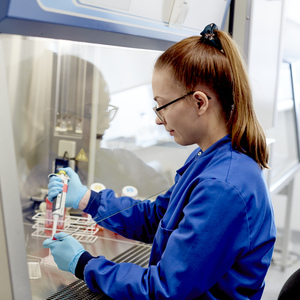
You'll study the science behind drug discovery and development while building hands-on experience in specialist laboratories. The course is designed to help you develop the analytical, research, data, and problem-solving skills that employers value in scientific and healthcare-related industries.

The integrated master's year gives you the opportunity to study at a higher level within the same degree. This can help you graduate with deeper subject knowledge, stronger research experience, and an advanced qualification that may support progression into specialist scientific roles, postgraduate research, or further professional training.

If you enjoy biology, chemistry, health sciences, and practical laboratory work, this course can help you turn that interest into a career-focused scientific skillset.

Pharmaceutical science is the study of how medicines are discovered, developed, tested, manufactured, and used safely in healthcare. It connects biology, chemistry, pharmacology, human health, and drug formulation to help improve how medicines are designed, developed and delivered.

MSci Applied Pharmaceutical Science at the University of Lincoln is a four-year integrated master's programme designed for students who want to develop advanced scientific knowledge and practical laboratory skills for careers in the pharmaceutical, biotechnology, and healthcare sectors.

You'll study the science behind drug discovery and development while building hands-on experience in specialist laboratories. The course is designed to help you develop the analytical, research, data, and problem-solving skills that employers value in scientific and healthcare-related industries.

The integrated master's year gives you the opportunity to study at a higher level within the same degree. This can help you graduate with deeper subject knowledge, stronger research experience, and an advanced qualification that may support progression into specialist scientific roles, postgraduate research, or further professional training.

If you enjoy biology, chemistry, health sciences, and practical laboratory work, this course can help you turn that interest into a career-focused scientific skillset.

Why study Applied Pharmaceutical Science at Lincoln?

Study a four-year integrated master’s degree
The MSci combines undergraduate and master’s-level study in one programme, helping you build advanced scientific knowledge and research confidence.

Explore the science behind medicines
Study how medicines are discovered, developed, formulated, tested, regulated, and used safely in healthcare.

Build practical laboratory skills
Develop hands-on experience through laboratory-based learning, using scientific techniques relevant to pharmaceutical, biotechnology, and healthcare settings.

Connect biology, chemistry, and health science
Gain a broad understanding of human biology, microbiology and immunology, alongside chemistry, pharmacology, toxicology, drug formulation, pharmaceutical technology, and pharmaceutical business, ethics, and regulation.

Prepare for different scientific careers
Build skills relevant to pharmaceutical development, biotechnology, healthcare science, clinical research, laboratory science, regulatory affairs, and postgraduate study.

Develop research and analytical confidence
Strengthen your ability to interpret data, solve problems, carry out scientific investigation, and communicate findings clearly.

Learn in a supportive environment
Access academic guidance, practical support, careers advice, and wellbeing services as you build confidence throughout your degree.

Study in a student-focused city
Lincoln offers a welcoming university environment with a strong student community and a modern campus setting.

What you'll learn

This course is designed to help you understand both the science of medicines and the wider healthcare context in which they are developed and used while applying your knowledge through practical laboratory work and research-based learning.

You can explore areas such as:

  • Drug discovery and development
  • Human biology and disease
  • Pharmacology and toxicology
  • Pharmaceutical chemistry
  • Microbiology and immunology
  • Laboratory and analytical techniques
  • Research methods and data analysis
  • Medicines regulation and quality control

You’ll also build the practical and professional skills used across scientific workplaces, including:

  • Laboratory investigation
  • Scientific analysis
  • Data interpretation
  • Research planning
  • Critical thinking
  • Problem-solving
  • Scientific communication
  • Professional laboratory practice

As you progress, you’ll have the opportunity to deepen your understanding of how medicines are developed and evaluated. You’ll look at the scientific processes behind pharmaceutical products, from early discovery and testing through to regulation, safety, quality, and use in healthcare.

During the integrated master’s year, you’ll develop more advanced scientific knowledge and research expertise. This can help prepare you for higher-level industry roles, research-focused careers, postgraduate study, or doctoral-level progression.

Modules

Module Overview

This module aims to provide a fundamental understanding of the chemistry required to understand the structure, development, and mode of action of drugs and medicines. Students can learn about functional groups, bonding, and kinetics and thermodynamics with a focus on drugs and medicines.

Module Overview

This module aims to provide a global overview of health and disease in order to understand the opportunities and challenges from a pharmaceutical sciences perspective. Students can learn about some of the biggest health challenges as defined by the WHO by studying the prevalence, epidemiology, and aetiology of some of the top 10 causes of death by communicable and non-communicable disease. They can also learn about the environmental, cultural, and socioeconomic factors which influence mortality rates.

From a pharmacological and pharmaceutical perspective students can learn what drugs are available to treat these diseases, how they work, and their method of delivery. They will also consider what opportunities and challenges there are for the development of new drugs taking into account global need, cost, and availability to all.

Module Overview

This module provides an overview of the anatomical structure and physiology of key systems of the human body. The students will learn about the levels of organization of the human body, and they will study the anatomy, physiology and regulation of the major organ systems, including the integumentary system, the nervous and endocrine systems, the skeletal and muscular systems, as well as the digestive, cardiovascular, respiratory, lymphatic, immune and reproductive systems.

Module Overview

Introduction to the Life Sciences is designed to provide a foundation for students to develop their knowledge and understanding of fundamental cell biology, biochemistry and genetics in the context of life sciences.

Module Overview

This modules covers what makes a successful drug, the basics of drug discovery and development and utilisation. The concepts of pharmaceutical science are taught along with the types of drugs, their formulation, and delivery.

Module Overview

This module will aim to develop the key skills required to work in the Pharmaceutical Science industry such as, statistics, mathematics, data handling, ethics, and critical analysis. Case studies from the pharmaceutical sector will be used to highlight the key advantages of having an understanding of all the elements of the programme especially these key skills.

Module Overview

The module is designed to provide students with the underpinning knowledge related to the analytical process, including instrumentation, automation and the application of techniques for the separation, speciation, and elucidation of structural information of analytes. The module also introduces students to associated experimental planning and advanced validation strategies.

Module Overview

This module will aim to integrate the process of drug discovery and target selection in relation to therapeutic area and how drugs are formulated and delivered to the target. Learning will be in the context of examples of drugs, from discovery to their registration or attrition.

Module Overview

This module aims to integrate the process of drug development in relation to the way in which a dosage forms are formulated and delivered to the target. Learning will be in the context of examples of dosage form, drug delivery route and underlying formulation, particle design, physical chemistry, and colloid science.

Module Overview

This module is concerned with the study of the mechanisms by which drugs interact with biochemical, cellular and physiological systems. The module aims to (1) Give an introduction to the key principles of pharmacology; (2) Provide a detailed knowledge of the mechanisms of actions of selected drug; (3) Develop a critical appreciation of the importance and relevance of pharmacology in the treatment of diseases; and (4) Understand the principles of toxicology and drug overdose.

Module Overview

This module provides an overview of the cellular and molecular basis of the immune response in both health and disease. This module will discuss the structure, function and complex mechanisms of host defence by B- and T-Cells and how our immune system are educated to recognise self vs non-self. We will also evaluate the role of inflammatory mediators, soluble effectors and cellular cytotoxicity in inflammation and immunity and appreciate techniques used to screen for these. The module will then finish by discussing how these system impact upon transplantation, autoimmunity, allergy and immunodeficiency and development of new therapies.

Module Overview

The module provides an overview of medical microbiology including bacterial, viral, fungal and parasitic infections both through study of the biology of specific microorganisms and the human diseases they cause. The module considers the transmission, including nosocomial infections and the detection of pathogens, the module also considers the burden, epidemiology, control and treatment of infectious diseases.

Module Overview

Pharmaceutical Science is a multidisciplinary programme with many different sciences and skills pulled into one discipline and this module is designed to bring all learning together from single discipline modules and highlight the relevance to the pharmaceutical industry. This module will advance understanding and application of key skills required to work in the Pharmaceutical Science Industry such as, statistics, mathematics, data handling, ethics and critical analysis. Case studies from the pharmaceutical sector will be used to highlight the key advantages of having an understanding of all the elements of the programme especially these key skills.

Module Overview

The University has a strong commitment to providing academic programmes with high vocational relevance, which is maintained through working links with local, national and international organisations and, in particular, through student work placements.

The Placement Year aims to give students a continuous experience of full-time work within an organisation. It should be a three-way co-operative activity between employer, student and University from which all parties benefit. It is more than simply obtaining work during a gap in study – work placements should enable students to experience at first hand the daily workings of an organisation while setting that experience in the broader context of their studies.

The Placement Year constitutes a work placement during an academic year, funded by full-time paid employment taking place between Level 2 and Level 3. The minimum duration of placement is 39 weeks.

Students wishing to undertake the work placement year must successfully complete the Level 2 of their programme.

All students on the Placement Year as part of their full-time undergraduate study will remain enrolled with the University during the period of placement and receive support. Students originally enrolled on 3 year programmes wishing to transfer to the 4 year programme must do so before the start of their placement, should gain the consent of their funders, where appropriate, and advise the University of their intention before the September enrolment.

Module Overview

The School believes that an option to study overseas is a valuable educational opportunity for our students. Provision of this option supports the educational aims of the School of Pharmacy and enhances the distinctiveness of its degrees at Lincoln. The optional year is intended to:

- enable students to benefit from studying within a cross cultural environment;

- expose students to a wider academic and cultural experience;

- enhance their future employment opportunities;

- by increasing their cultural and professional mobility.

This module is optional for students within the School.

Study Abroad is a year long module which enables students to spend a year studying abroad at one of the University’s approved partner institutions. Eligible students must have completed their second year of study to a satisfactory standard and successfully completed the application process for the year abroad.

During the year spent abroad, students share classes with local students and study on a suite of locally-delivered taught modules which have been approved in advance by the University. Upon their return, as part of the assessment for this modules, students are required to critically reflect upon their experience of living and studying in a different cultural environment and the skills acquired.

Module Overview

This module studies the cutting-edge of advanced drug delivery and nanomedicine, an area that sits at the interface of multiple scientific disciplines. The knowledge and skills gained will be highly applicable to future employment within the pharmaceutical industry and academia. Key is the understanding of how the body interacts with drug delivery vehicles and how this anatomical knowledge can be applied to the design of new more efficient drug carriers. By understanding the immunological basis of how toxicity evolves, this further optimises understanding of safety in the structural design of these systems.

Module Overview

This module looks at advanced aspects of pharmacology, aiming to build an understanding of drug-target engagement in relation to therapy, as well as drug metabolism and pharmacokinetics.

Module Overview

This module covers the regulations that surround the pharmaceutical industry, from drug registration to laboratory, clinical, and manufacturing standards

Module Overview

This module explores novel therapies including biologics, nucleic acids, gene therapy, and personalised medicines and dissects their potential use in the future. It will also explore the part genetics can play in the clinical use of these novel medicines and the impact it can have.

Module Overview

Within this module students will explore the challenges that occur around the world within the pharmaceutical field and how the industry is looking to overcome these challenges. Some of the areas that will be covered include: counterfeit medicine, medicine fraud, alternative medicines, natural products, green pharmaceuticals, infrastructure, and transport of medicines.

Module Overview

As technology evolves at a rapid pace, this module aims to cover the essentials of cutting edge methods for analysis and delivery and taking into account the problems and issues surrounding manufacturing of active pharmaceutical ingredients.

Module Overview

In this module students have the opportunity to undertake an independent programme of research under supervision from a member of staff. It provides students with an opportunity to demonstrate original and critical thought, as well as to build practical and project-management skills.

A wide range of subject expertise exists within the School, and students are expected to select a project that is relevant to their programme of study. Under the guidance of a supervisor, students can review the literature, identify a hypothesis or hypotheses, and design a programme of research to test their hypotheses. They will be expected to manage the project, including obtaining relevant ethical approval and conducting a risk assessment. They will collect and analyse data, recording their activities in a lab notebook. Projects can be conducted in the laboratory or field, as appropriate for their field of study, use mathematical modelling or use pre-collected data to test hypotheses via meta-analysis.

Students may work individually or in groups addressing similar questions, but must write up individually. The project will be written up in the format of a scientific paper following closely the style of a key journal relevant to their area of study, or as a thesis.

Module Overview

Biological assays are one of the most important tools in preclinical research. They enable researchers to identify early in the drug discovery and development pipeline whether a test compound or biologic has the desired effect. This module has been specifically designed for you to develop a working knowledge of high throughput bioassays commonly used by the pharmaceutical industry. This will be achieved through a series of lectures, seminars, workshops, and practicals provided by both academics and industrial scientists with assay specific expertise. The module will culminate with you developing your own assay and a trip to a pharmaceutical company to see high-throughput assays work in practice.

Module Overview

This module is designed to allow students to explore the processes of developing a medicine and the challenges posed by this process. Students will consider how the drug can be formulated, manufactured and delivered to the target site with the correct dosage. Students will consider the differences in processes between small molecule and biologic drugs and how the challenges in each case can be potentially solved.

Module Overview

Within this module, students will explore the planning, management and analysis of the pre-clinical and clinical testing process of drug development. Students will investigate the best approaches for analysing novel pharmaceuticals and their safety, and how they are examined within the human body. Students will evaluate current approaches and discuss possible improvements or adaptions to enhance the process, reduce animal testing by use of the 3 'R's

Module Overview

Projects present the opportunity of working towards generating a scientific article of publishable quality. This module comprises a research project for the MSci Pharmaceutical Science degrees. The project will be supervised by a member of academic staff and provide the opportunity to contribute to research across a variety of research areas. The projects will be set within one of the school's research disciplines and be offer the opportunity to work alongside researchers within the school and university.

Module Overview

The MSci Pharmaceutical Science module placements are designed to provide students with the opportunity to develop their professional skills by spending time within a relevant workplace. Students will have the opportunity to work with an industrial partner on a project and gain experience in the pharmaceutical industry. This module will allow students to continue building contacts within the industry in which they wish to work.


† Some courses may offer optional modules. The availability of optional modules may vary from year to year and will be subject to minimum student numbers being achieved. This means that the availability of specific optional modules cannot be guaranteed. Optional module selection may also be affected by staff availability.

Modules

Module Overview

This module aims to provide a fundamental understanding of the chemistry required to understand the structure, development, and mode of action of drugs and medicines. Students can learn about functional groups, bonding, and kinetics and thermodynamics with a focus on drugs and medicines.

Module Overview

This module aims to provide a global overview of health and disease in order to understand the opportunities and challenges from a pharmaceutical sciences perspective. Students can learn about some of the biggest health challenges as defined by the WHO by studying the prevalence, epidemiology, and aetiology of some of the top 10 causes of death by communicable and non-communicable disease. They can also learn about the environmental, cultural, and socioeconomic factors which influence mortality rates.

From a pharmacological and pharmaceutical perspective students can learn what drugs are available to treat these diseases, how they work, and their method of delivery. They will also consider what opportunities and challenges there are for the development of new drugs taking into account global need, cost, and availability to all.

Module Overview

This module provides an overview of the anatomical structure and physiology of key systems of the human body. The students will learn about the levels of organization of the human body, and they will study the anatomy, physiology and regulation of the major organ systems, including the integumentary system, the nervous and endocrine systems, the skeletal and muscular systems, as well as the digestive, cardiovascular, respiratory, lymphatic, immune and reproductive systems.

Module Overview

Introduction to the Life Sciences is designed to provide a foundation for students to develop their knowledge and understanding of fundamental cell biology, biochemistry and genetics in the context of life sciences.

Module Overview

This modules covers what makes a successful drug, the basics of drug discovery and development and utilisation. The concepts of pharmaceutical science are taught along with the types of drugs, their formulation, and delivery.

Module Overview

This module will aim to develop the key skills required to work in the Pharmaceutical Science industry such as, statistics, mathematics, data handling, ethics, and critical analysis. Case studies from the pharmaceutical sector will be used to highlight the key advantages of having an understanding of all the elements of the programme especially these key skills.

Module Overview

The module is designed to provide students with the underpinning knowledge related to the analytical process, including instrumentation, automation and the application of techniques for the separation, speciation, and elucidation of structural information of analytes. The module also introduces students to associated experimental planning and advanced validation strategies.

Module Overview

This module will aim to integrate the process of drug discovery and target selection in relation to therapeutic area and how drugs are formulated and delivered to the target. Learning will be in the context of examples of drugs, from discovery to their registration or attrition.

Module Overview

This module aims to integrate the process of drug development in relation to the way in which a dosage forms are formulated and delivered to the target. Learning will be in the context of examples of dosage form, drug delivery route and underlying formulation, particle design, physical chemistry, and colloid science.

Module Overview

This module is concerned with the study of the mechanisms by which drugs interact with biochemical, cellular and physiological systems. The module aims to (1) Give an introduction to the key principles of pharmacology; (2) Provide a detailed knowledge of the mechanisms of actions of selected drug; (3) Develop a critical appreciation of the importance and relevance of pharmacology in the treatment of diseases; and (4) Understand the principles of toxicology and drug overdose.

Module Overview

This module provides an overview of the cellular and molecular basis of the immune response in both health and disease. This module will discuss the structure, function and complex mechanisms of host defence by B- and T-Cells and how our immune system are educated to recognise self vs non-self. We will also evaluate the role of inflammatory mediators, soluble effectors and cellular cytotoxicity in inflammation and immunity and appreciate techniques used to screen for these. The module will then finish by discussing how these system impact upon transplantation, autoimmunity, allergy and immunodeficiency and development of new therapies.

Module Overview

The module provides an overview of medical microbiology including bacterial, viral, fungal and parasitic infections both through study of the biology of specific microorganisms and the human diseases they cause. The module considers the transmission, including nosocomial infections and the detection of pathogens, the module also considers the burden, epidemiology, control and treatment of infectious diseases.

Module Overview

Pharmaceutical Science is a multidisciplinary programme with many different sciences and skills pulled into one discipline and this module is designed to bring all learning together from single discipline modules and highlight the relevance to the pharmaceutical industry. This module will advance understanding and application of key skills required to work in the Pharmaceutical Science Industry such as, statistics, mathematics, data handling, ethics and critical analysis. Case studies from the pharmaceutical sector will be used to highlight the key advantages of having an understanding of all the elements of the programme especially these key skills.

Module Overview

The University has a strong commitment to providing academic programmes with high vocational relevance, which is maintained through working links with local, national and international organisations and, in particular, through student work placements.

The Placement Year aims to give students a continuous experience of full-time work within an organisation. It should be a three-way co-operative activity between employer, student and University from which all parties benefit. It is more than simply obtaining work during a gap in study – work placements should enable students to experience at first hand the daily workings of an organisation while setting that experience in the broader context of their studies.

The Placement Year constitutes a work placement during an academic year, funded by full-time paid employment taking place between Level 2 and Level 3. The minimum duration of placement is 39 weeks.

Students wishing to undertake the work placement year must successfully complete the Level 2 of their programme.

All students on the Placement Year as part of their full-time undergraduate study will remain enrolled with the University during the period of placement and receive support. Students originally enrolled on 3 year programmes wishing to transfer to the 4 year programme must do so before the start of their placement, should gain the consent of their funders, where appropriate, and advise the University of their intention before the September enrolment.

Module Overview

The School believes that an option to study overseas is a valuable educational opportunity for our students. Provision of this option supports the educational aims of the School of Pharmacy and enhances the distinctiveness of its degrees at Lincoln. The optional year is intended to:

- enable students to benefit from studying within a cross cultural environment;

- expose students to a wider academic and cultural experience;

- enhance their future employment opportunities;

- by increasing their cultural and professional mobility.

This module is optional for students within the School.

Study Abroad is a year long module which enables students to spend a year studying abroad at one of the University’s approved partner institutions. Eligible students must have completed their second year of study to a satisfactory standard and successfully completed the application process for the year abroad.

During the year spent abroad, students share classes with local students and study on a suite of locally-delivered taught modules which have been approved in advance by the University. Upon their return, as part of the assessment for this modules, students are required to critically reflect upon their experience of living and studying in a different cultural environment and the skills acquired.

Module Overview

This module studies the cutting-edge of advanced drug delivery and nanomedicine, an area that sits at the interface of multiple scientific disciplines. The knowledge and skills gained will be highly applicable to future employment within the pharmaceutical industry and academia. Key is the understanding of how the body interacts with drug delivery vehicles and how this anatomical knowledge can be applied to the design of new more efficient drug carriers. By understanding the immunological basis of how toxicity evolves, this further optimises understanding of safety in the structural design of these systems.

Module Overview

This module looks at advanced aspects of pharmacology, aiming to build an understanding of drug-target engagement in relation to therapy, as well as drug metabolism and pharmacokinetics.

Module Overview

This module covers the regulations that surround the pharmaceutical industry, from drug registration to laboratory, clinical, and manufacturing standards

Module Overview

This module explores novel therapies including biologics, nucleic acids, gene therapy, and personalised medicines and dissects their potential use in the future. It will also explore the part genetics can play in the clinical use of these novel medicines and the impact it can have.

Module Overview

Within this module students will explore the challenges that occur around the world within the pharmaceutical field and how the industry is looking to overcome these challenges. Some of the areas that will be covered include: counterfeit medicine, medicine fraud, alternative medicines, natural products, green pharmaceuticals, infrastructure, and transport of medicines.

Module Overview

As technology evolves at a rapid pace, this module aims to cover the essentials of cutting edge methods for analysis and delivery and taking into account the problems and issues surrounding manufacturing of active pharmaceutical ingredients.

Module Overview

In this module students have the opportunity to undertake an independent programme of research under supervision from a member of staff. It provides students with an opportunity to demonstrate original and critical thought, as well as to build practical and project-management skills.

A wide range of subject expertise exists within the School, and students are expected to select a project that is relevant to their programme of study. Under the guidance of a supervisor, students can review the literature, identify a hypothesis or hypotheses, and design a programme of research to test their hypotheses. They will be expected to manage the project, including obtaining relevant ethical approval and conducting a risk assessment. They will collect and analyse data, recording their activities in a lab notebook. Projects can be conducted in the laboratory or field, as appropriate for their field of study, use mathematical modelling or use pre-collected data to test hypotheses via meta-analysis.

Students may work individually or in groups addressing similar questions, but must write up individually. The project will be written up in the format of a scientific paper following closely the style of a key journal relevant to their area of study, or as a thesis.

Module Overview

Biological assays are one of the most important tools in preclinical research. They enable researchers to identify early in the drug discovery and development pipeline whether a test compound or biologic has the desired effect. This module has been specifically designed for you to develop a working knowledge of high throughput bioassays commonly used by the pharmaceutical industry. This will be achieved through a series of lectures, seminars, workshops, and practicals provided by both academics and industrial scientists with assay specific expertise. The module will culminate with you developing your own assay and a trip to a pharmaceutical company to see high-throughput assays work in practice.

Module Overview

This module is designed to allow students to explore the processes of developing a medicine and the challenges posed by this process. Students will consider how the drug can be formulated, manufactured and delivered to the target site with the correct dosage. Students will consider the differences in processes between small molecule and biologic drugs and how the challenges in each case can be potentially solved.

Module Overview

Within this module, students will explore the planning, management and analysis of the pre-clinical and clinical testing process of drug development. Students will investigate the best approaches for analysing novel pharmaceuticals and their safety, and how they are examined within the human body. Students will evaluate current approaches and discuss possible improvements or adaptions to enhance the process, reduce animal testing by use of the 3 'R's

Module Overview

Projects present the opportunity of working towards generating a scientific article of publishable quality. This module comprises a research project for the MSci Pharmaceutical Science degrees. The project will be supervised by a member of academic staff and provide the opportunity to contribute to research across a variety of research areas. The projects will be set within one of the school's research disciplines and be offer the opportunity to work alongside researchers within the school and university.

Module Overview

The MSci Pharmaceutical Science module placements are designed to provide students with the opportunity to develop their professional skills by spending time within a relevant workplace. Students will have the opportunity to work with an industrial partner on a project and gain experience in the pharmaceutical industry. This module will allow students to continue building contacts within the industry in which they wish to work.


† Some courses may offer optional modules. The availability of optional modules may vary from year to year and will be subject to minimum student numbers being achieved. This means that the availability of specific optional modules cannot be guaranteed. Optional module selection may also be affected by staff availability.

Support and student experience

Starting university is a big step, especially in a science subject that combines biology, chemistry, health sciences, laboratory work, and research. Lincoln’s teaching and support are designed to help you build confidence gradually.

Support may include:

  • Academic tutors and study support
  • Laboratory and technical guidance
  • Careers and employability services
  • Wellbeing and mental health support
  • Help with progression planning and future career choices
  • Library and digital learning resources

You’ll be supported as you develop both academically and professionally. The course aims to help you build practical competence, scientific understanding, and the confidence to apply your skills in professional settings.

Placements

Gain hands-on experience in a real workplace and apply your learned skills in a professional setting.

  • Work with our Careers and Employability Team to explore placement or internship opportunities
  • Develop practical skills and professional confidence
  • Build your CV before you graduate
  • Explore career options in a real workplace
  • Pay a placement year fee if you choose a placement year 
  • You’ll need to cover travel and living costs

Careers and future opportunities

What can you do with an Applied Pharmaceutical Science degree?

This degree is designed to prepare graduates for careers across pharmaceutical, healthcare, biotechnology, life sciences, and research sectors.

Potential career pathways include:

  • Pharmaceutical science
  • Clinical research
  • Pharmaceutical manufacturing
  • Quality control and assurance
  • Regulatory affairs
  • Biotechnology
  • Healthcare science
  • Biomedical laboratory work
  • Research and development
  • Postgraduate research or doctoral study

Possible graduate roles include

  • Pharmaceutical scientist
  • Research scientist
  • Clinical trials associate
  • Quality control analyst
  • Biomedical laboratory scientist
  • Regulatory affairs associate
  • Pharmaceutical manufacturing scientist
  • Biotechnology scientist
  • Healthcare science assistant or associate
  • Laboratory technician or scientist

The MSci qualification can also support progression into specialist scientific training, postgraduate research, or doctoral study.

Skills employers value

Throughout the course, you can develop scientific and transferable skills valued across pharmaceutical, healthcare, and research settings.

You can build skills in:

  • Practical laboratory work
  • Scientific research
  • Data analysis and interpretation
  • Professional communication
  • Problem-solving
  • Critical thinking
  • Scientific reporting
  • Independent learning
  • Working safely and accurately in laboratory settings

These skills can support careers directly related to pharmaceutical science, but they are also valuable in wider scientific, healthcare, biotechnology, and research-based industries.

The time I spent in the laboratory enhanced my research and manual skills in the areas of synthetic and analytical chemistry.

Is this course right for you?

This course could suit you if you:

  • Enjoy biology, chemistry, or health sciences
  • Want to understand how medicines are discovered, developed, tested, and regulated
  • Prefer practical laboratory learning
  • Are interested in pharmaceutical, biotechnology, healthcare, or research careers
  • Want to build scientific skills with real-world relevance
  • Are considering postgraduate research or specialist scientific training
  • Want the added advantage of an integrated master’s qualification

You do not need to have a fixed career plan already. This degree helps you develop specialist scientific knowledge while keeping your future options open across pharmaceutical, healthcare, biotechnology, and research sectors.

Entry Requirements 2026-27

United Kingdom

104 to 112 UCAS Tariff points.

This must be achieved from a minimum of 2 A Levels or equivalent Level 3 qualifications, to include 32 points from Biology , Chemistry or Physics. For example:

A Level: BCC to BBC to include a Grade B in Biology, Chemistry or Physics

BTEC Extended Diploma in Applied Science: DMM

(Please include units on application)

T Level in Science: Merit Overall

(Health or Health Science not accepted)

Access to Higher Education Diploma: 104 to 112 UCAS points to be achieved from 45 Level 3 credits, including 32 points from 15 credits in Biology, Chemistry or Physics.

International Baccalaureate: 28 points overall to include a Higher Level 4 in Biology , Chemistry or Physics.

GCSE's: Minimum of three at grade 4 or above, which must include English, Maths and Science. Equivalent Level 2 qualifications may be considered.

The University accepts a wide range of qualifications as the basis for entry and do accept a combination of qualifications which may include A Levels, BTECs, Extended Project Qualification (EPQ).

We may also consider applicants with extensive and relevant work experience and will give special individual consideration to those who do not meet the standard entry qualifications.

International

Non UK Qualifications:

If you have studied outside of the UK, and are unsure whether your qualification meets the above requirements, please visit our country pages

https://www.lincoln.ac.uk/studywithus/internationalstudents/entryrequirementsandyourcountry/ for information on equivalent qualifications.

EU and Overseas students will be required to demonstrate English language proficiency equivalent to IELTS 6.0 overall, with a minimum of 5.5 in each element. For information regarding other English language qualifications we accept, please visit the English Requirements page

https://www.lincoln.ac.uk/studywithus/internationalstudents/englishlanguagerequirementsandsupport/englishlanguagerequirements/

If you do not meet the above IELTS requirements, you may be able to take part in one of our Pre-sessional English and Academic Study Skills courses.

https://www.lincoln.ac.uk/studywithus/internationalstudents/englishlanguagerequirementsandsupport/pre-sessionalenglishandacademicstudyskills/


For applicants who do not meet our standard entry requirements, our Science Foundation Year can provide an alternative route of entry onto our full degree programmes:
https://www.lincoln.ac.uk/course/sfysfyub/

If you would like further information about entry requirements, or would like to discuss whether the qualifications you are currently studying are acceptable, please contact the Admissions team on 01522 886097, or email admissions@lincoln.ac.uk

Contextual Offers

At Lincoln, we recognise that not everybody has had the same advice and support to help them get to higher education. Contextual offers are one of the ways we remove the barriers to higher education, ensuring that we have fair access for all students regardless of background and personal experiences. For more information, including eligibility criteria, visit our Offer Guide pages. If you are applying to a course that has any subject specific requirements, these will still need to be achieved as part of the standard entry criteria.

Entry Requirements 2027-28

United Kingdom

112 to 120 UCAS Tariff points from a minimum of 2 A Levels or equivalent Level 3 qualifications, to include 40 points from Biology , Chemistry or Physics.

If you are eligible for a contextual offer, a one grade or 8 UCAS Tariff point reduction to the standard entry requirements will be applied. Subject specific requirements will still be required as part of the standard entry criteria.

A Level: BBB to include a Grade B in Biology, Chemistry or Physics

BTEC Extended Diploma in Applied Science: DDM (Please include units on application)

We will also accept a Pearson Level 3 Alternative Academic Qualification BTEC National (equivalent to 1 A Level) in Medical Science or Applied Science to meet the subject specific requirement: Merit

NCFE Cache Level 3 Technical Occupational Entry in Social Care (Diploma): Distinction

T Level in Science (Health or Health Science not accepted) : Merit Overall

Access to Higher Education Diploma: 120 UCAS points to be achieved from 45 Level 3 credits, including 40 points from 15 credits in Biology, Chemistry or Physics.

International Baccalaureate: 30 points overall to include a Higher Level 4 in Biology , Chemistry or Physics.

GCSE's: Minimum of three at grade 4 or above, which must include English, Maths and Science. Equivalent Level 2 qualifications may be considered.


The University accepts a wide range of qualifications as the basis for entry and do accept a combination of qualifications which may include A Levels, BTECs, Extended Project Qualification (EPQ).

We may also consider applicants with extensive and relevant work experience and will give special individual consideration to those who do not meet the standard entry qualifications.

International

Non UK Qualifications:

If you have studied outside of the UK, and are unsure whether your qualification meets the above requirements, please visit our country pages

https://www.lincoln.ac.uk/studywithus/internationalstudents/entryrequirementsandyourcountry/ for information on equivalent qualifications.

EU and Overseas students will be required to demonstrate English language proficiency equivalent to IELTS 6.0 overall, with a minimum of 5.5 in each element. For information regarding other English language qualifications we accept, please visit the English Requirements page

https://www.lincoln.ac.uk/studywithus/internationalstudents/englishlanguagerequirementsandsupport/englishlanguagerequirements/

If you do not meet the above IELTS requirements, you may be able to take part in one of our Pre-sessional English and Academic Study Skills courses.

https://www.lincoln.ac.uk/studywithus/internationalstudents/englishlanguagerequirementsandsupport/pre-sessionalenglishandacademicstudyskills/


For applicants who do not meet our standard entry requirements, our Science Foundation Year can provide an alternative route of entry onto our full degree programmes:
https://www.lincoln.ac.uk/course/sfysfyub/

If you would like further information about entry requirements, or would like to discuss whether the qualifications you are currently studying are acceptable, please contact the Admissions team on 01522 886097, or email admissions@lincoln.ac.uk

Contextual Offers

At Lincoln, we recognise that not everybody has had the same advice and support to help them get to higher education. Contextual offers are one of the ways we remove the barriers to higher education, ensuring that we have fair access for all students regardless of background and personal experiences. For more information, including eligibility criteria, visit our Offer Guide pages. If you are applying to a course that has any subject specific requirements, these will still need to be achieved as part of the standard entry criteria.

Fees and Funding

University Study is a major investment, so it’s important to understand the costs and support available. A full breakdown of the fees associated with this programme can be found below. Eligible students may be able to access scholarships and bursaries to help with study costs.

Course Fees

Fees and Funding

University Study is a major investment, so it’s important to understand the costs and support available. A full breakdown of the fees associated with this programme can be found below. Eligible students may be able to access scholarships and bursaries to help with study costs.

Course Fees

Find out More by Visiting Us

The best way to find out what it is really like to live and learn at Lincoln is to visit us in person. We offer a range of opportunities across the year to help you to get a real feel for what it might be like to study here.

Three students walking together on campus in the sunshine

What You Need to Know

We want you to have all the information you need to make an informed decision on where and what you want to study. In addition to the information provided on this course page, our What You Need to Know page offers explanations on key topics including programme validation/revalidation, additional costs, and contact hours.

What You Need to Know

We want you to have all the information you need to make an informed decision on where and what you want to study. In addition to the information provided on this course page, our What You Need to Know page offers explanations on key topics including programme validation/revalidation, additional costs, and contact hours.

The University intends to provide its courses as outlined in these pages, although the University may make changes in accordance with the Student Admissions Terms and Conditions.